

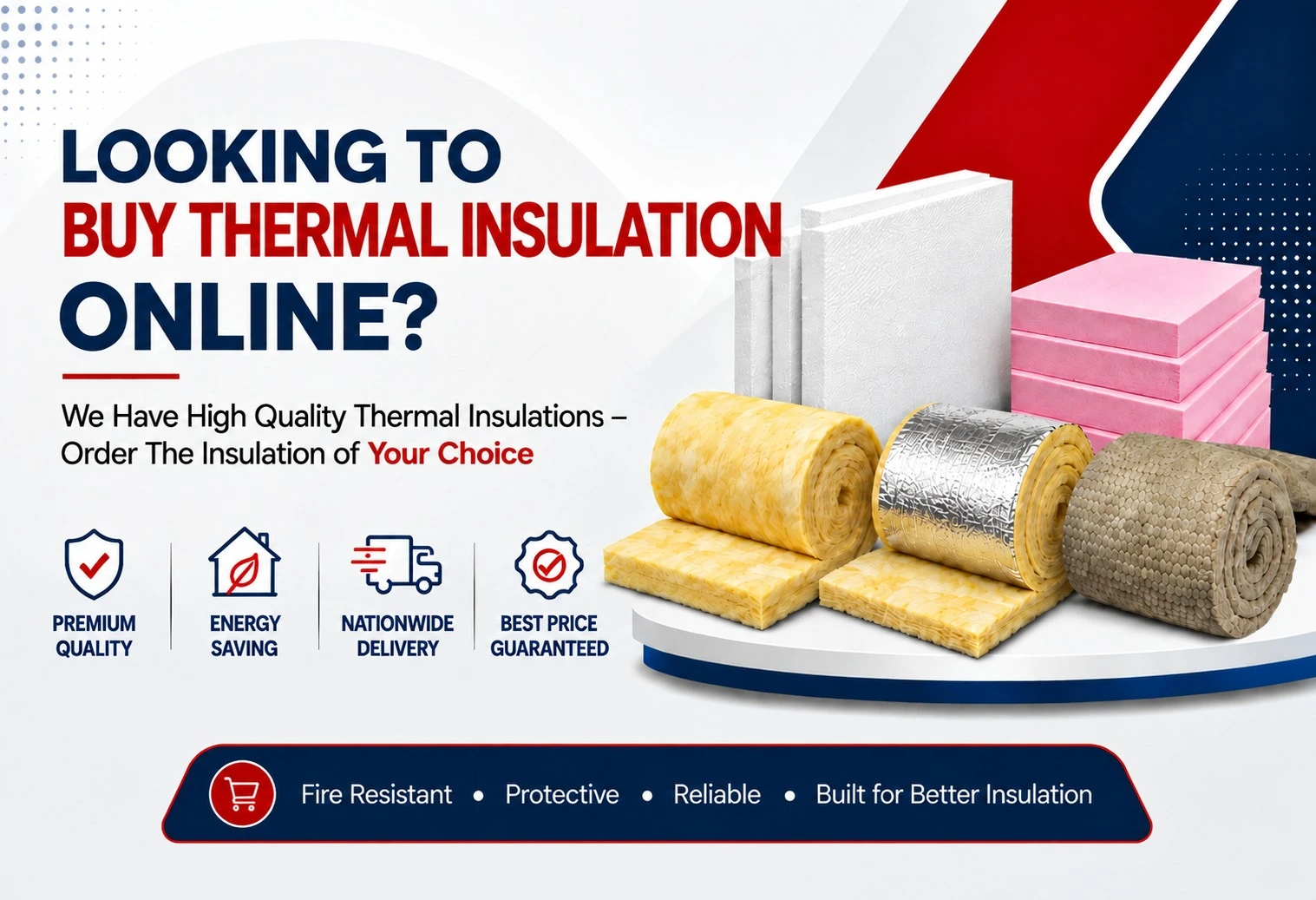
What Types of Thermal Insulations are We Offering
At Smart Materials Solutions, we offer a range of thermal insulations selected according to the application, required thermal performance, temperature conditions, moisture exposure, fire-safety requirements and budget. Our insulation solutions are suitable for residential, commercial and industrial applications where effective temperature control and energy efficiency are important.
Different insulation materials have different properties. Some provide excellent thermal resistance with very low weight, while others offer superior moisture resistance, compressive strength, sound insulation or fire resistance. Therefore, selecting the right insulation is not simply a matter of choosing the thickest material; the material type, density, thickness and installation method all affect the final performance.
We offer the following thermal insulation materials
- EPS Insulation – (Thermopore / Thermocol /Styrofoam
- XPS Insulation – Extruded Polystyrene (Jumbolon Board)
- Glass Wool Insulation without Aluminum Foil
- Glass Wool Insulation with Aluminum Foil (FSK)
- Glass Wool Insulation with Plastic Foil (WMSK)
- Rockwool Thermal Insulation
At Smart Materials Solutions, we offer a range of thermal insulation materials selected according to the application, required thermal performance, temperature conditions, moisture exposure, fire-safety requirements and budget. Our insulation solutions are suitable for residential, commercial and industrial applications where effective temperature control and energy efficiency are important.
Different insulation materials have different properties. Some provide excellent thermal resistance with very low weight, while others offer superior moisture resistance, compressive strength, sound insulation or fire resistance. Therefore, selecting the right insulation is not simply a matter of choosing the thickest material; the material type, density, thickness and installation method all affect the final performance.
We offer the following thermal insulation materials
- EPS Insulation – Expanded Polystyrene (Thermopore /Thermocol/Styrofoam
- XPS Insulation – Extruded Polystyrene (Jumbolon Board)
- Glass Wool Insulation without Aluminum Foil
- Glass Wool Insulation with Aluminum Foil (FSK)
- Glass Wool Insulation with Plastic Foil (WMSK)
- Rockwool Insulation
Glass Wool Thermal Insulation
Glass wool is a fibrous insulation material manufactured from glass fibres. It traps air between the fibres, reducing heat transfer and providing effective thermal and acoustic insulation.
Unfaced Glass Wool (Without Aluminum Foil)
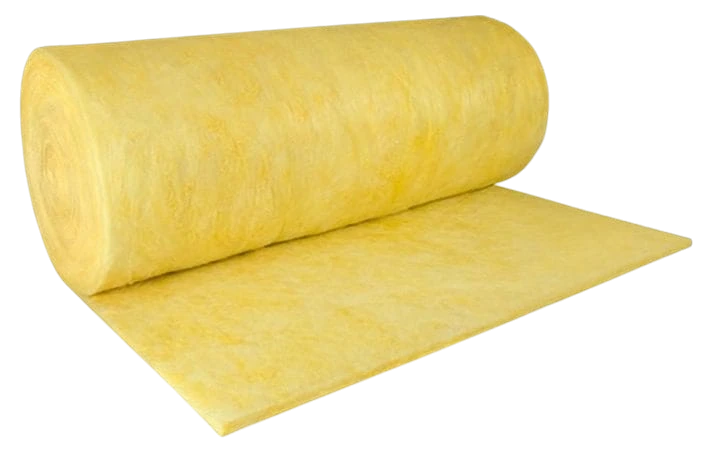
Unfaced glass wool (Without Aluminum Foil) exhibits excellent performance in heat insulation, sound insulation, corrosion resistance, etc. Glass wool blankets are often used in projects in the fields of construction, industry, HVAC, etc., such as wall insulation of buildings, roof insulation, and sound insulation of factory workshops. unfaced glass wool is a flexible blanket/batt insulation. It provides an excellent balance of thermal control and sound absorption for drywall partitions, ceilings, and HVAC ducts.
Good Fire Resistant Properties
R value Ranges between 2.8 to 3.8 depending on Material Density
Thermal Conductivity Ranges Between 0.034–0.042 W/m·K
Temperature Range -50°C to +250°C
Glass Wool With Aluminum Foil
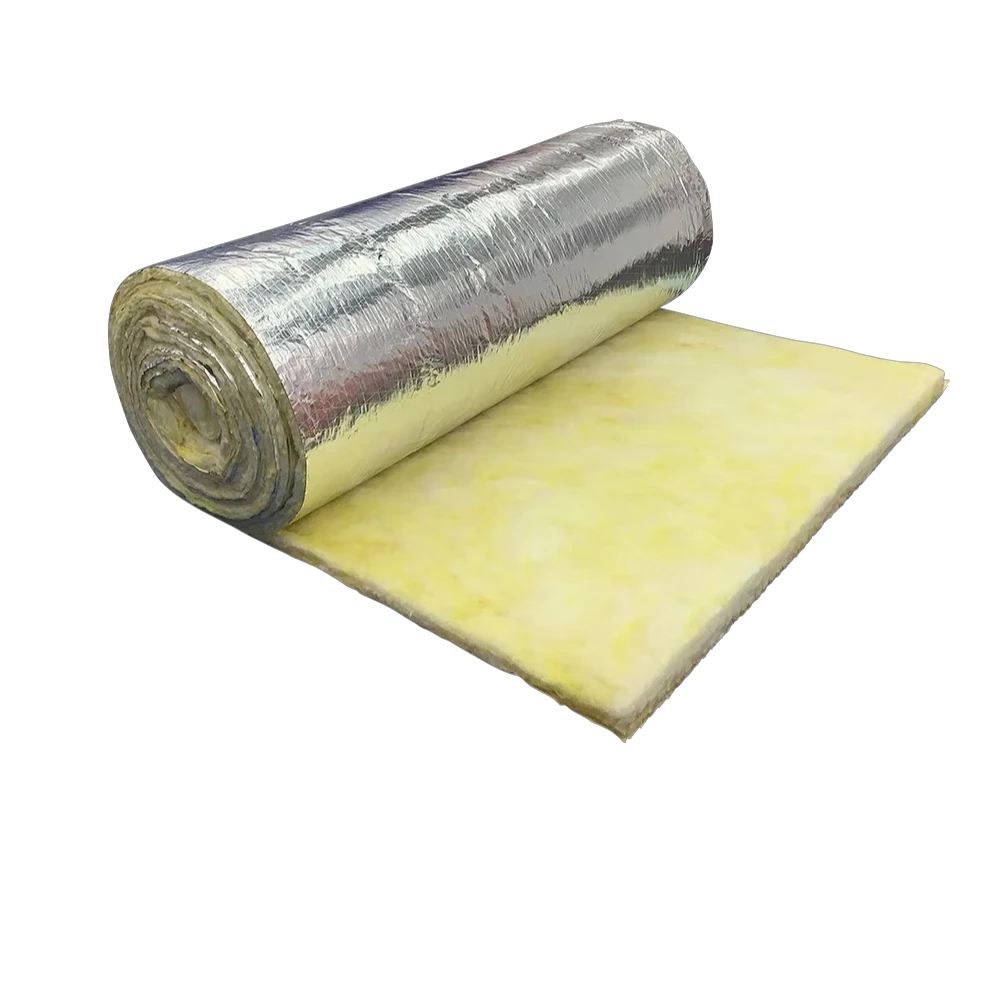
Glass wool is also avaiable with a foil facing material.The facing layer can be Aluminum Foil or Plastic Layer which provides an additional vapour-control. Aluminum Foil Facing Layer (FSK) also acts as radiant-heat-reflective surface when correctly installed. The aluminum foil does not significantly change the intrinsic thermal conductivity of the glass wool itself; its additional thermal benefit depends on installation conditions, particularly the presence of an appropriate air space.
Good Fire Resistant Properties
R value Ranges between 2.8 to 3.8 depending on Material Density
Thermal Conductivity Ranges Between 0.034–0.042 W/m·K
Temperature Range -50°C to +250°C
Glass Wool With White Plastic Foil

Glass wool blanket with WMSK (White Mineral Surfaced Kraft) is an advanced insulation solution that combines the exceptional thermal properties of glass wool with the added benefit of a white facing material. This unique combination offers enhanced insulation performance and improved aesthetics, making it an ideal choice for a wide range of applications.
The white facing of the glass wool blanket with WMSK offers design flexibility and aesthetic appeal. It provides a clean and uniform appearance, making it suitable for applications where visual appeal is important, such as commercial buildings, offices, and retail spaces.
Good Fire Resistant Properties
R value Ranges between 2.8 to 3.8 depending on Material Density
Thermal Conductivity Ranges Between 0.034–0.042 W/m·K
Temperature Range -50°C to +250°C
Rock Wool Thermal Insulation

Rock wool insulation, also known as mineral wool or stone wool, is a highly versatile and widely used insulation material in the construction industry. It is manufactured from natural basalt or diabase rock, which is melted and spun into fibers. These fibers are then processed and compressed to form rigid matt with exceptional thermal and acoustic insulation properties.
Rock wool possesses excellent thermal insulation properties, effectively reducing heat transfer and improving energy efficiency. It is renowned for its exceptional fire resistance which makes it highly effective in preventing the spread of flames and maintaining the integrity of the structure.
With Its dense and fibrous structure, rock wool offers exceptional sound absorption capabilities. It effectively reduces noise transmission by absorbing and dampening sound waves, creating quieter and more comfortable living or working environments.
Excellent Fire Resistant & Sound Absorption Properties
R value Ranges between 3 to 4.3 depending on Material Density
Thermal Conductivity Ranges Between 0.034–0.038 W/m·K
Temperature Range -50°C to +800°C
Extruded Polystyrene (XPS - Jumbolon Board) Thermal Insulation
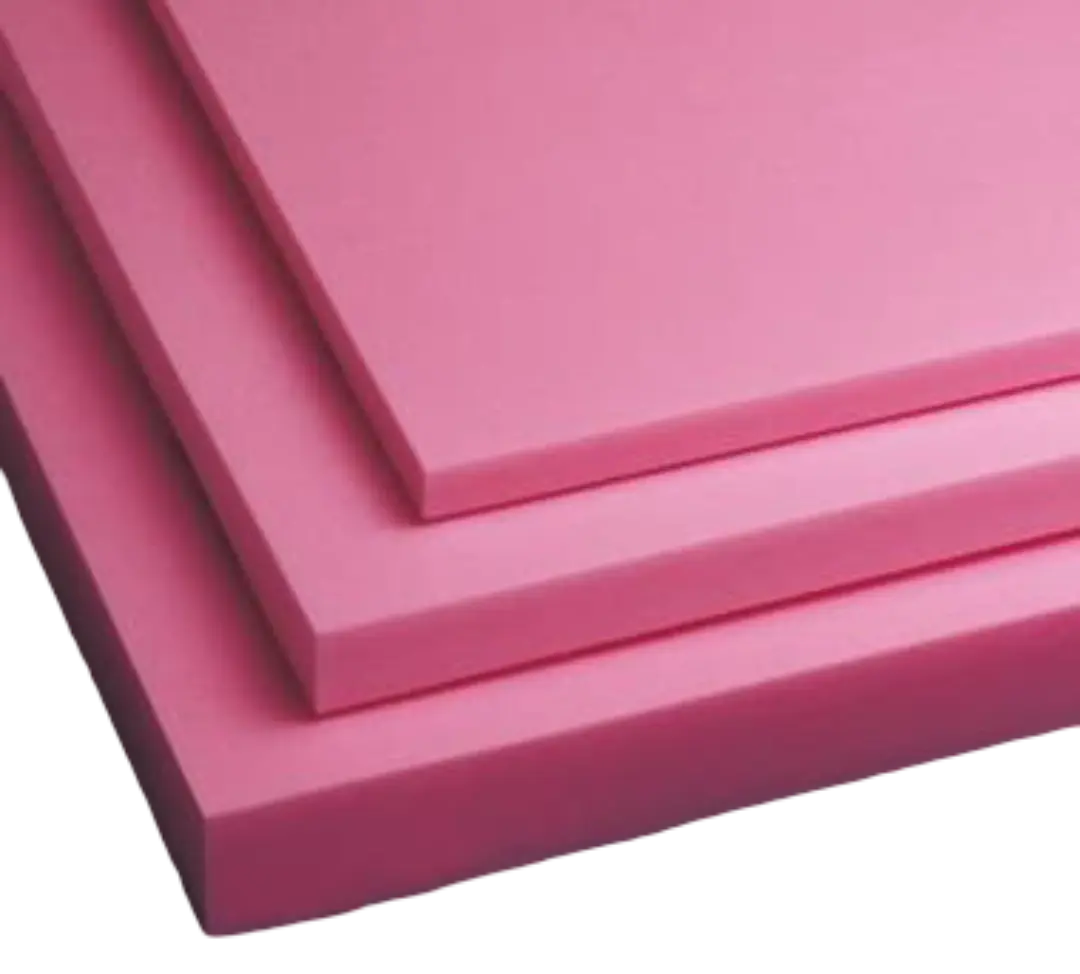
XPS (Extruded Polystyrene) also known as Jumbolon Board. It is a closed-cell rigid foam insulation manufactured through an extrusion process. Compared with conventional EPS, XPS generally offers higher compressive strength, lower water absorption and excellent dimensional stability.
Its closed-cell structure makes XPS particularly useful in applications where insulation may be exposed to moisture, pressure or demanding environmental conditions.
High Compressive Strength & Excellent Moisture Resistance
R value Ranges between 4.5 to R-5.5 depending on Material Purity
Thermal Conductivity Ranges Between 0.028–0.034 W/m·K
Temperature Range -50°C to +75°C
Expanded Polystyrene (EPS) Thermal Insulation

EPS (Expanded Polystyrene) also known as Thermopore, Thermocol and styrofoam insulation. It is lightweight, economical and widely used thermal insulation material consisting of expanded polystyrene beads containing a large amount of trapped air. The cellular structure provides good resistance to heat transfer.
EPS is particularly suitable for applications where good thermal insulation, low weight and cost-effectiveness are important. It can be supplied in different densities and thicknesses depending on the required thermal and mechanical performance.
Light Weight and Economical
R value between 3.5 to R-4.5 depending on density
Thermal Conductivity Ranges Between 0.034–0.038 W/m·K
Temperature Range -50°C to +75°C
Extruded Polystyrene (XPS - Jumbolon Board) Thermal Insulation
XPS (Extruded Polystyrene) also known as Jumbolon Board. It is a closed-cell rigid foam insulation manufactured through an extrusion process. Compared with conventional EPS, XPS generally offers higher compressive strength, lower water absorption and excellent dimensional stability.
Its closed-cell structure makes XPS particularly useful in applications where insulation may be exposed to moisture, pressure or demanding environmental conditions.
High Compressive Strength & Excellent Moisture Resistance
R value Ranges between 4.5 to R-5.5 depending on Material Purity
Thermal Conductivity Ranges Between 0.028–0.034 W/m·K
Temperature Range -50°C to +75°C
Expanded Polystyrene (EPS) Thermal Insulation
EPS (Expanded Polystyrene) also known as Thermopore, Thermocol and styrofoam insulation. It is lightweight, economical and widely used thermal insulation material consisting of expanded polystyrene beads containing a large amount of trapped air. The cellular structure provides good resistance to heat transfer.
EPS is particularly suitable for applications where good thermal insulation, low weight and cost-effectiveness are important. It can be supplied in different densities and thicknesses depending on the required thermal and mechanical performance.
Light Weight and Economical
R value between 3.5 to R-4.5 depending on density
Thermal Conductivity Ranges Between 0.034–0.038 W/m·K
Temperature Range -50°C to +75°C
Glass Wool Thermal Insulation
Glass wool is a fibrous insulation material manufactured from glass fibres. It traps air between the fibres, reducing heat transfer and providing effective thermal and acoustic insulation.
Glass Wool Without Aluminum Foil
Unfaced glass wool (Without Aluminum Foil) exhibits excellent performance in heat insulation, sound insulation, corrosion resistance, etc. Glass wool blankets are often used in projects in the fields of construction, industry, HVAC, etc., such as wall insulation of buildings, roof insulation, and sound insulation of factory workshops. unfaced glass wool is a flexible blanket/batt insulation. It provides an excellent balance of thermal control and sound absorption for drywall partitions, ceilings, and HVAC ducts.
Glass Wool With Aluminum Foil
Glass wool is also avaiable with a foil facing material.The facing layer can be Aluminum Foil or Plastic Layer which provides an additional vapour-control. Aluminum Foil Facing Layer (FSK) also acts as radiant-heat-reflective surface when correctly installed. The aluminum foil does not significantly change the intrinsic thermal conductivity of the glass wool itself; its additional thermal benefit depends on installation conditions, particularly the presence of an appropriate air space.
Glass Wool With White Plastic Foil
Glass wool blanket with WMSK (White Mineral Surfaced Kraft) is an advanced insulation solution that combines the exceptional thermal properties of glass wool with the added benefit of a white facing material. This unique combination offers enhanced insulation performance and improved aesthetics, making it an ideal choice for a wide range of applications.
The white facing of the glass wool blanket with WMSK offers design flexibility and aesthetic appeal. It provides a clean and uniform appearance, making it suitable for applications where visual appeal is important, such as commercial buildings, offices, and retail spaces.
Good Fire Resistant Properties
R value Ranges between 2.8 to 3.8 depending on Material Density
Thermal Conductivity Ranges Between 0.034–0.042 W/m·K
Temperature Range -50°C to +250°C
Rock Wool Thermal Insulation
Rock wool insulation, also known as mineral wool or stone wool, is a highly versatile and widely used insulation material in the construction industry. It is manufactured from natural basalt or diabase rock, which is melted and spun into fibers. These fibers are then processed and compressed to form rigid matt with exceptional thermal and acoustic insulation properties.
Rock wool possesses excellent thermal insulation properties, effectively reducing heat transfer and improving energy efficiency. It is renowned for its exceptional fire resistance which makes it highly effective in preventing the spread of flames and maintaining the integrity of the structure.
With Its dense and fibrous structure, rock wool offers exceptional sound absorption capabilities. It effectively reduces noise transmission by absorbing and dampening sound waves, creating quieter and more comfortable living or working environments.